






The Multi-sectoral Alliance for Improved Nutrition (MAIN) Project, implemented by CARE Bangladesh, The Hunger Project, HarvestPlus Solutions, and iDE Bangladesh, conducted a household assessment in Shantiganj Upazila to identify pregnant women and children under five and generate evidence to support nutrition-sensitive planning. Beyond beneficiary identification, the assessment captured information on household income, economic vulnerability, WASH conditions, agricultural land ownership, access to health services, nutrition service coverage, and exposure to disaster and climate risks. The findings provide an evidence base for government and development partners to strengthen targeted interventions and multi-sectoral planning.
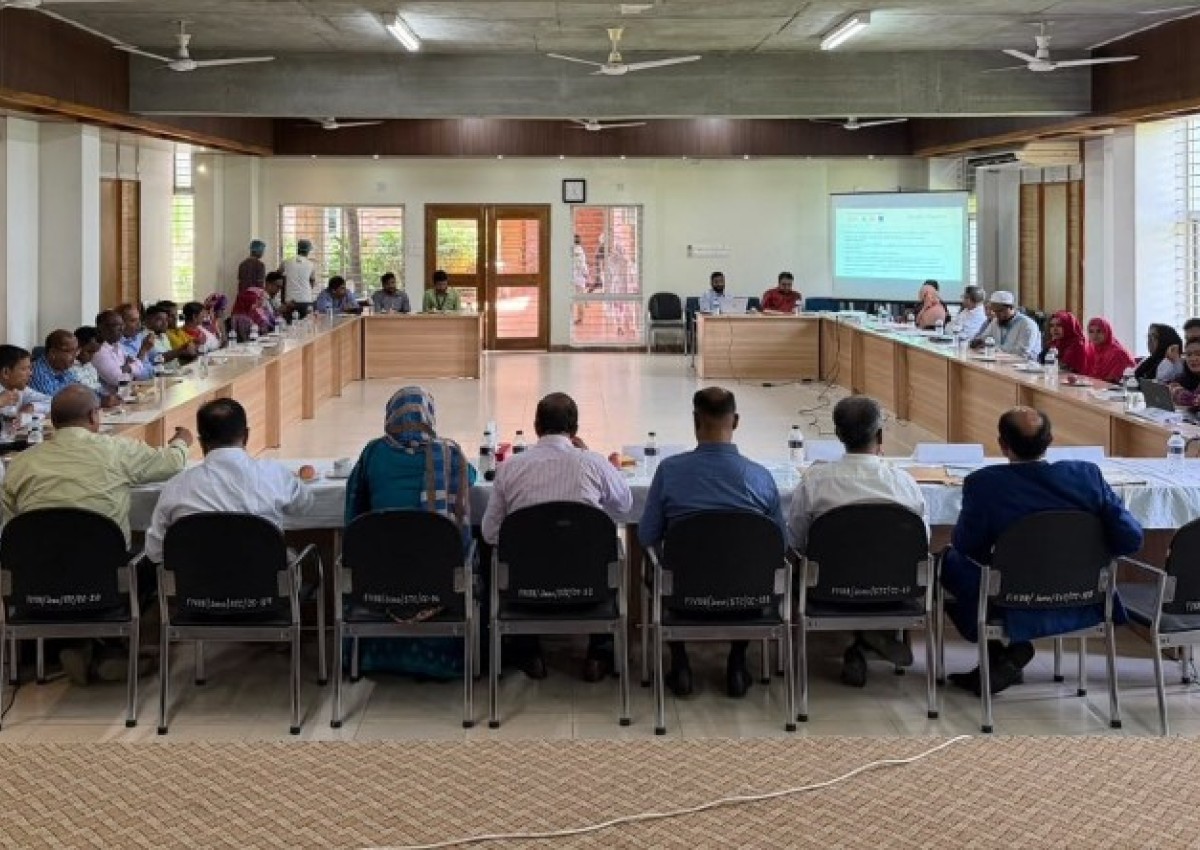
To disseminate the findings and promote evidence-based planning, a workshop titled “Data for Decision-Making: Dissemination of Household Assessment (PW & CU5) Findings to Inform Multi-Sectoral Planning and Action in Shantiganj Upazila” was held on 23 September 2026 at the Jehin Ahmed Conference Room of FIVDB, Shantiganj.
Dr. Mohammad Eunus Ali, Director of the Institute of Public Health Nutrition (IPHN), presided over the workshop. Dr. Rizwanur Rahman, Project Director of the Health and Nutrition Services Improvement and System Strengthening Project (HNSISSP), graced the event as the chief guest, Dr. Chowdhury Jalaluddin Morshed, Civil Surgeon, Sunamganj as. the co-chair, Special guests present is included Mr. Nasir Uddin, Deputy Secretary, Community Clinic Health Support Trust; Dr. Mahbubul Alam, Divisional Director-Health, Sylhet Div; and Mr. Md. Islam Uddin, Upazila Nirbahi Officer, Jagannathpur.
The event was moderate by Mohammad Hafijul Islam and the The assessment findings were presented by Afroza Binte Zaman, Senior MEAL and Documentation Officer of the 'MAIN' project. Through assessment conducted in May to July, a A data set has been developed for pregnant women and children under five in Shantiganj Upazila were identified and listed digitally; plans are in place to include them in the project's distribution of 'Multiple Micronutrient Supplement (Matrikona) and Micronutrient Powder (Pushtikona) supplements. Participants also discussed the potential use of the database for health, nutrition, family planning, and social protection initiatives led by government agencies and development partners.
The speakers participating in the workshop emphasized the subject of HHs integration in national system and sectoral targeted intervention.
In his address as the chief guest, Dr. Rizwanur Rahman, Project Director of the Health and Nutrition Services Improvement and System Strengthening Project, stated that, “To achieve wider MMS coverage, all stakeholders must work together to track anemia and MMS uptake, integrate data into government systems, and strengthen community-based service delivery.”
In his address, Dr. Mohammad Eunus Ali, Director of the Institute of Public Health Nutrition (IPHN), and chair of the session “The household database provides a strong foundation for targeted nutrition programming, while mobile technology can enhance counseling, follow-up, and evidence-based planning for mothers and children.”
Among others panelist included Dr. Rawshan Akhter Zahan Alo (Deputy Director, IPHN), Dr. Akhter Imam (Assistant Project Director, HNSISSP), Dr. Nusrat Zahan Mithen (Deputy Director, Bangladesh National Nutrition Council), Dr. Zahidul Islam (MIS, DGHS), Dr. Md. Hashibul Nasim Sohan (RMO, UHC, Shantiganj), Dr. Subir Khiyang (The Hunger Project, Dr. Puja Das, UNICEF and Poresh Moni Das, iDE). There also present UP chairman, Local/NGO/UN/SUN/ Govt representatives and service providers.
Stakeholders recommended integrating the household database with government MIS platforms to support beneficiary tracking, MMS monitoring, and coordinated service delivery. The database can also facilitate targeted SBCC messaging, mobile-based counseling, and follow-up of maternal and child nutrition services. Considering Shantiganj's vulnerability to flash floods, participants emphasized incorporating anticipatory actions for maternal and child health into disaster preparedness plans. They further recommended using the findings to inform annual multi-sectoral planning across health, nutrition, WASH, agriculture, social protection, and local government sectors. Participants urged formalizing data-sharing mechanisms and scaling up the model to other upazilas to strengthen evidence-based planning and resource allocation nationwide.
The workshop concluded with a shared commitment from government agencies, development partners, local government representatives, and service providers to promote data-driven decision-making, strengthen multi-sectoral coordination, and utilize the household database as a foundation for improving maternal and child nutrition outcomes in Shantiganj and beyond.